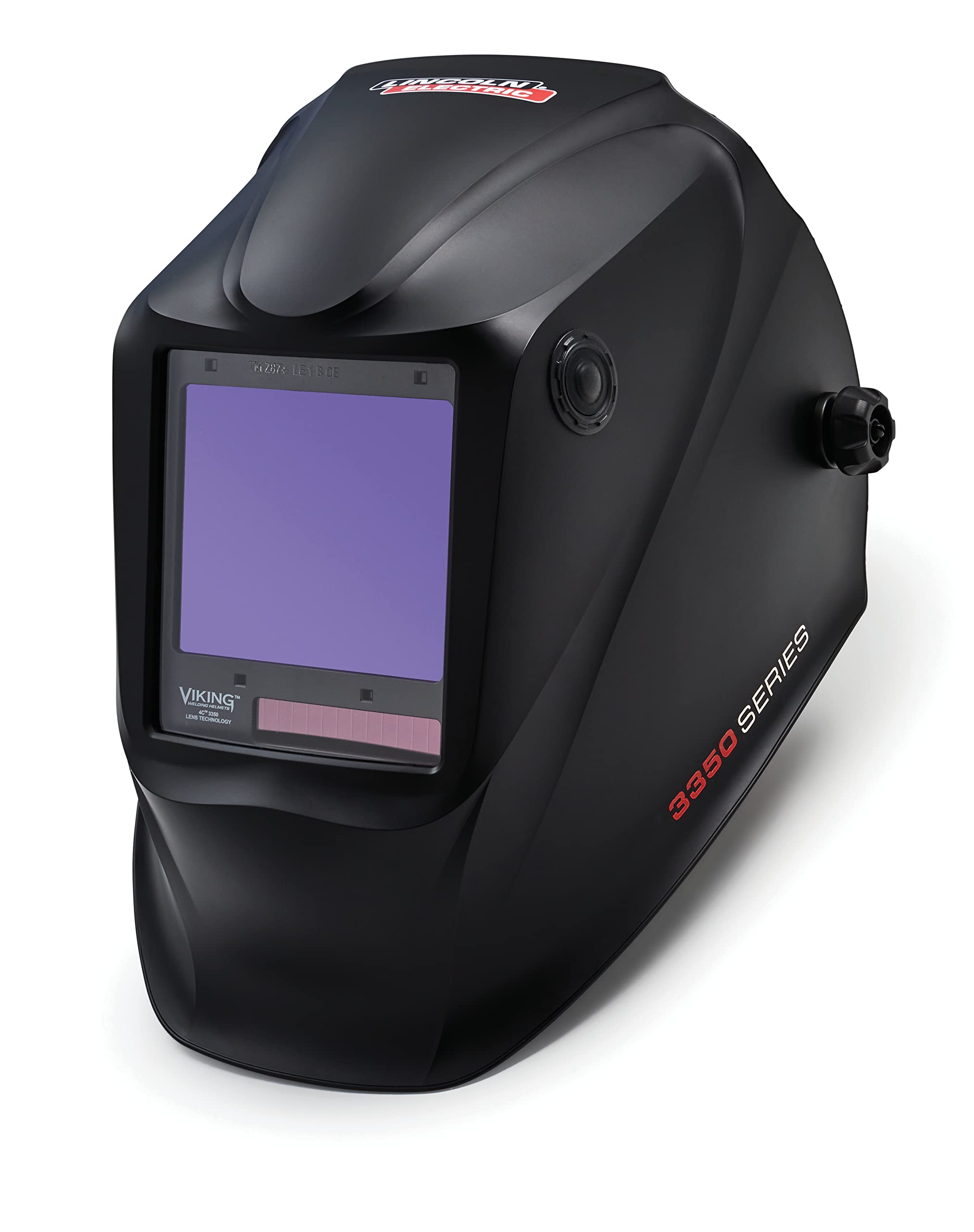
Lincoln Viking 3350 vs. Miller Infinity: A 2026 Deep Dive Comparison
Last Updated: March 6, 2026 by Louis Sham
As the welding industry continues to evolve, so does the technology packed into our essential safety gear. For 2026, two titans of the auto-darkening welding helmet market, the Lincoln Viking 3350 and the Miller Infinity, remain at the forefront of innovation, offering welders unparalleled clarity, comfort, and control. While both helmets are celebrated for their robust performance, subtle yet significant differences cater to distinct user preferences and welding demands.
This in-depth review aims to dissect these differences, providing a comprehensive comparison to help you make the most informed decision for your welding needs.

Lincoln Viking 3350
4C™ Lens Technology
11.8 sq. in. viewing area | 1/1/1/1 optical clarity

Miller Infinity
ClearLight™ Technology
13.4 sq. in. viewing area | 1/1/1/1 optical clarity
Quick Comparison Overview
| Feature | Lincoln Viking 3350 | Miller Infinity |
|---|---|---|
| Viewing Area | 11.8 sq. in. | 13.4 sq. in. |
| Optical Clarity | 1/1/1/1 | 1/1/1/1 |
| Lens Technology | 4C™ Lens Technology | ClearLight™ Lens |
| Color Representation | Color-neutral view | True-color, reduced green tint |
| Headgear | X6 HeadGear (6-point) | Highly adjustable, padded |
| Control Type | Intuitive analog controls | Precision digital controls |
| Operating Modes | Weld, Grind (external switch) | Weld, Cut, Grind, X-Mode |
| X-Mode (sunlight interference) | No | Yes |
| Price Point | High (better value) | Premium (highest features) |
| Best For | Long-duration welding, natural view | Wide field of view, outdoor work |
Lincoln Viking 3350: Detailed Analysis
Optical Performance & 4C™ Technology
The Lincoln Viking 3350 has long been a benchmark for optical clarity, and its 2026 iterations continue this legacy. Boasting a genuine 1/1/1/1 optical class rating, it delivers an exceptionally clear, color-neutral view thanks to its 4C™ Lens Technology. Many users describe the view as so natural, it feels as though they aren’t looking through a lens at all.
1/1/1/1 (highest rating)
11.8 square inches
4C™ Color Management
Advanced anti-fatigue design
The 4C™ technology minimizes eye strain and enhances the visibility of the weld puddle, making it a favorite for professionals who spend extended hours under the hood. This advanced technology is particularly beneficial for precision TIG welding where puddle control is critical.
2026 Updates & Enhancements
Recent upgrades for the 2026 Viking 3350 include:
- Enhanced grind mode detection – Faster switching and more reliable activation
- Improved low-light sensor performance – Better arc detection in challenging lighting conditions
- Refined auto-darkening response – Consistent performance across all welding processes
Comfort & Ergonomics
The helmet’s X6 Headgear is highly praised for its comfort and ergonomic design, distributing weight effectively for long-term wear. The six-point contact system ensures balanced pressure distribution, reducing neck fatigue during extended welding sessions.
Some users note that the shiny exterior of the Viking 3350 can be susceptible to superficial scratches. Consider using a protective helmet bag for transport and storage to maintain its appearance.
Controls & Usability
The Viking 3350 features intuitive analog controls, which many users prefer for their:
- Perceived durability in harsh workshop environments
- Ease of use with heavy welding gloves
- Simple, straightforward adjustments without digital menus
- External grind mode switch – particularly convenient for quick transitions without removing the helmet
Miller Infinity: Detailed Analysis
ClearLight™ Technology & Color Accuracy
The Miller Infinity, particularly its latest iteration featuring the ClearLight™ lens, is a formidable contender. Miller’s ClearLight™ technology is their answer to true color representation, significantly reducing the traditional green tint often found in auto-darkening lenses. This results in one of the most natural color views on the market, with impeccable 1/1/1/1 optical clarity.
1/1/1/1 (highest rating)
13.4 square inches (class-leading)
ClearLight™ True Color
Minimal green hue
The Miller Infinity’s 13.4 square inch viewing area is the largest in its class. This expansive window minimizes tunnel vision and provides a more immersive and controlled welding experience, crucial for intricate work and maintaining a comprehensive view of the workspace.
Advanced Features & X-Mode
The Miller Infinity truly shines with its technological sophistication. The helmet’s X-Mode is a standout feature, designed to reduce interference from sunlight and ensure reliable arc detection even when sensors are obstructed—a significant advantage in challenging outdoor or bright workshop environments.
Operating Modes
The Infinity offers four distinct modes for comprehensive task coverage:
| Mode | Purpose | Key Benefits |
|---|---|---|
| Weld Mode | Primary welding operations | Standard auto-darkening with adjustable shade |
| Cut Mode | Plasma and torch cutting | Optimized for cutting arc characteristics |
| Grind Mode | Grinding and fabrication | Lens stays light for visibility |
| X-Mode | Outdoor/bright environments | Sunlight interference reduction |
Digital Controls & Customization
Miller has focused on enhancing digital features for 2026, doubling down on customization and user-friendly interfaces. The digital controls offer:
- Precise adjustments for shade, sensitivity, and delay
- Memory settings for different welding processes
- Weld time tracking for productivity monitoring
- Easy glove operation with well-designed button placement
Some users find the Infinity’s headgear slightly heavier due to its larger lens. However, the well-padded and adjustable design typically compensates for this during extended use. Overall comfort remains subjective and depends on individual head shape and preference.
Head-to-Head Feature Comparison
Optical Performance
When comparing optical performance, both helmets achieve a perfect 1/1/1/1 optical clarity rating, which is the gold standard for distortion-free viewing. However, the perception of color can differ:
| Aspect | Viking 3350 | Miller Infinity |
|---|---|---|
| Color Rendering | Color-neutral, natural view | Vibrant, true-color with reduced green tint |
| Clarity Rating | 1/1/1/1 | 1/1/1/1 |
| Puddle Visibility | Excellent – enhanced detail | Excellent – true color representation |
| Eye Fatigue | Minimized by 4C™ technology | Minimized by ClearLight™ technology |
Viewing Area Comparison
The viewing area difference is one of the most significant distinctions between these two helmets:
11.8 sq. in. – Substantial and excellent clarity
13.4 sq. in. – Class-leading expansive view
For welders who prioritize an ultra-wide field of vision, the Miller Infinity generally takes the lead. This expansive view is a significant advantage for complex welding tasks and maintaining broad situational awareness. The Viking 3350’s viewing area is still substantial and offers excellent clarity, but it is noticeably smaller than the Infinity’s offering.
Comfort & Headgear Systems
Both brands have invested heavily in their headgear designs, but they take different approaches:
| Feature | Viking 3350 – X6 HeadGear | Miller Infinity Headgear |
|---|---|---|
| Contact Points | 6-point system | Multi-point adjustable |
| Weight Distribution | Balanced, even pressure | Well-distributed with padding |
| Padding | Comfortable, breathable | Highly cushioned |
| Respirator Compatible | Yes | Yes – optimized design |
| Adjustability | Excellent | Excellent |
Durability & Build Quality
Durability is a key consideration for any professional tool, and both the Viking 3350 and the Infinity are built to withstand demanding jobsite conditions. Constructed from high-quality materials, these helmets are designed for longevity.
Both helmets come with robust warranties and replacement parts availability. Keep your lens cover films clean and replace them regularly to maintain optimal visibility and protect the expensive auto-darkening cartridge underneath.
Price & Value Analysis
Investment Considerations
The price point for both premium helmets reflects their advanced features and build quality:
| Aspect | Lincoln Viking 3350 | Miller Infinity |
|---|---|---|
| Price Category | Premium | Premium-Plus |
| Value Proposition | Exceptional performance-to-cost ratio | Highest-end features justify premium |
| Warranty | Robust coverage | Comprehensive protection |
| Best For | Professional welders seeking value | Professionals prioritizing latest tech |
While the Miller Infinity is often positioned as a premium choice with a higher cost, its advanced features and expansive viewing area can justify the investment for serious professionals. The Lincoln Viking 3350 is also a significant investment, but many users find it offers exceptional value for its performance and durability, especially considering its robust warranty.
Which Helmet Should You Choose?
Choose the Lincoln Viking 3350 If You:
- Prioritize exceptional value for premium features
- Prefer analog controls for simplicity and durability
- Want a color-neutral view that feels completely natural
- Frequently switch between welding and grinding (external switch advantage)
- Spend long hours welding and need proven eye fatigue reduction
- Value the X6 headgear’s balanced weight distribution
Buy Lincoln Viking 3350 on Amazon
Choose the Miller Infinity If You:
- Need the largest viewing area available (13.4 sq. in.)
- Work outdoors or in bright environments (X-Mode advantage)
- Prefer true-color representation with minimal green tint
- Want advanced digital controls with memory settings
- Require four distinct operating modes for versatility
- Value the latest technological innovations in welding safety
🔥 Quick Reference Summary
Winner for Viewing Area: Miller Infinity (13.4 sq. in. vs 11.8 sq. in.)
Winner for Value: Lincoln Viking 3350 (exceptional performance-to-price ratio)
Winner for Outdoor Work: Miller Infinity (X-Mode for sunlight interference)
Winner for Simplicity: Lincoln Viking 3350 (analog controls, external grind switch)
Winner for Technology Features: Miller Infinity (digital controls, 4 modes, memory settings)
Optical Clarity: TIE – Both achieve perfect 1/1/1/1 rating
The Bottom Line: Both helmets are engineered for excellence and represent a significant upgrade for any serious welder. The Viking 3350 excels in value and simplicity, while the Infinity leads in viewing area and advanced features. Your choice should align with your specific welding environment and personal preferences.
Final Verdict
The technological advancements in 2026 models are evident in both helmets. The Viking 3350’s 4C Lens Technology and the Miller Infinity’s ClearLight™ Lens Technology represent the pinnacle of optical clarity and color reproduction, aiming to reduce eye strain and improve the overall welding experience. Both brands continue to innovate, ensuring that welders have access to the best possible vision and protection.
Ultimately, the choice between the Lincoln Viking 3350 and the Miller Infinity in 2026 comes down to individual priorities. If unparalleled optical clarity, a natural color spectrum, and user-friendly analog controls are paramount, the Viking 3350 is an exceptional choice. If an expansive viewing area, advanced digital features like X-Mode, and true-color representation are more critical, the Miller Infinity stands out as a top-tier option.
Whichever helmet you choose, remember that proper maintenance extends the life of these premium investments. Clean lens covers regularly, replace them when scratched, store your helmet in a protective bag, and check battery levels before important jobs. Both the Viking 3350 and Miller Infinity are built to last, but care ensures you’ll get years of reliable service.
Ready to Upgrade Your Safety?
Lincoln Viking 3350
Premium performance meets exceptional value
Invest in the Best Technology
Miller Infinity
Industry-leading viewing area and features
Frequently Asked Questions
What are the main differences between the Lincoln Viking 3350 and the Miller Infinity?
The Lincoln Viking 3350 features a smaller viewing area of 11.8 sq. in. with 4C™ Lens Technology for color-neutral viewing, while the Miller Infinity boasts a larger 13.4 sq. in. viewing area with ClearLight™ Technology for true-color representation. Additionally, the Viking 3350 uses intuitive analog controls, whereas the Infinity has advanced digital controls with multiple operating modes.
Which helmet is better for outdoor welding?
The Miller Infinity is better suited for outdoor welding due to its X-Mode feature, which reduces sunlight interference and ensures reliable arc detection in bright conditions. This capability makes it ideal for welders who frequently work outdoors or in well-lit environments.
How do the comfort features compare between the two helmets?
Both helmets are designed for comfort with advanced headgear systems. The Lincoln Viking 3350 uses the X6 HeadGear for balanced weight distribution, while the Miller Infinity features a highly adjustable, padded headgear that, although slightly heavier, compensates for comfort during extended use.
Is there a significant price difference between the two helmets?
Yes, the Lincoln Viking 3350 is generally priced lower and is considered to offer exceptional value for its features, while the Miller Infinity is positioned at a premium price point, reflecting its advanced technology and larger viewing area. The choice often comes down to budget versus desired features.
What maintenance tips should I follow to extend the life of my welding helmet?
To extend the life of your welding helmet, regularly clean the lens covers to maintain optimal visibility, replace scratched covers promptly, and store the helmet in a protective bag to prevent damage. Additionally, check battery levels before important jobs to ensure reliable performance.