Safety standards and certifications for welding helmets you should know
Last Updated: April 20, 2026 by Louis Sham
Welding helmet safety standards — what to look for
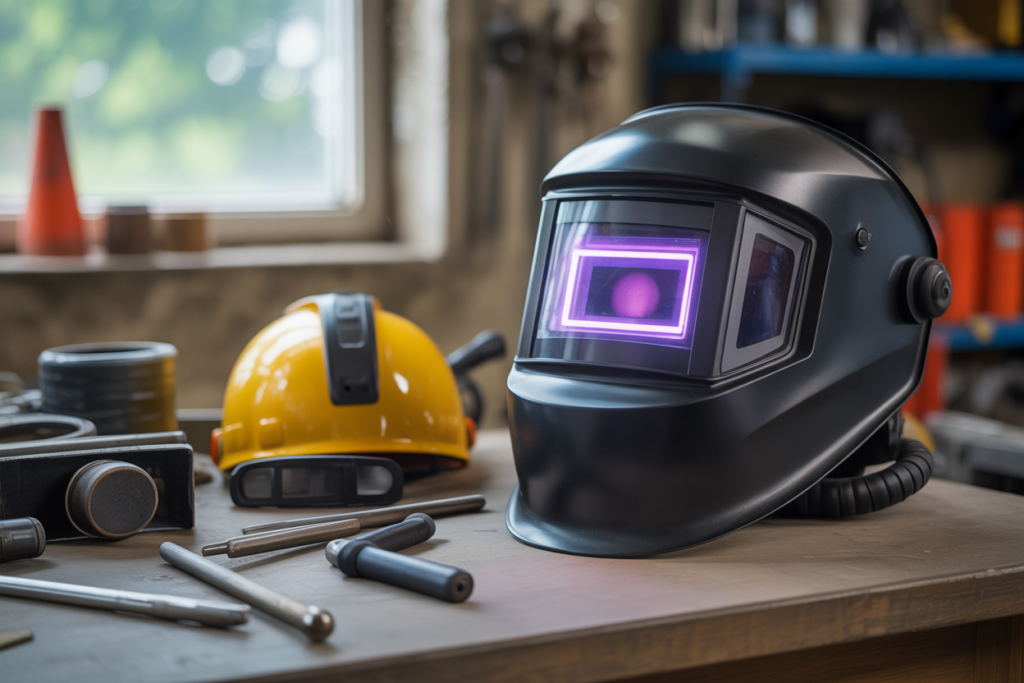
Welding helmets are not just about comfort and visibility; they’re a critical line of defense for your eyes and face. Understanding the safety standards and certifications that apply to welding helmets helps you choose gear that really protects you and stays compliant with regulations in your region. Here’s what you should know.
Key standards and what they cover
United States: ANSI/ISEA Z87.1
This is the core standard for eye and face protection in the workplace. For welding helmets, Z87.1 covers general requirements such as impact resistance, optical quality, and proper labeling. It sets expectations for how well a helmet can withstand projectiles, how clearly you should see through the lens, and how the product should be marked. If a helmet is certified under this standard, it indicates it meets a baseline level of protection for eye and face safety in typical work environments.
Auto-darkening filters (ADFs) used in many helmets also depend on forming part of the helmet’s protection in relation to Z87.1. Some models are tested specifically for welding applications under this standard, and you’ll often see Z87.1 marks alongside process-specific shading information.
Canada: CSA Z94.3
Canada uses the CSA Z94.3 standard for eye and face protection. Helmets sold in Canada that meet this standard carry the CSA mark and are tested for impact resistance, optical quality, and other protective features appropriate to welding and related processes.
European Union: CE marking with EN standards
In the EU, welding helmets and their auto-darkening filters typically fall under several EN standards. The most relevant ones are:
- EN 379 for auto-darkening welding filters: defines optical performance categories, shading ranges, and the ability of the filter to protect against UV/IR radiation, as well as the speed at which the filter darkens when an arc is struck.
- EN 166 for eye protection: covers general eye protection requirements, including scratch resistance, field of view, and optical quality.
- EN 175 for face protection: relates to protective devices used with welding and allied processes and the way they attach to helmets and frames.
Products sold in the EU should carry a CE mark indicating conformity with these EN standards. The packaging or product datasheet usually lists the specific EN numbers that apply to the helmet and its filters.
Other regions and certifications
Many regions follow their own adaptations or combinations of the above standards. When buying internationally, look for the regional standard marks that apply to your location (for example, local PPE directives or national standards) in addition to any global or regional marks the manufacturer provides. Some helmets also carry additional safety markings such as UL listings, which indicate third-party safety testing for certain markets.
What to look for on a welding helmet’s label and specs
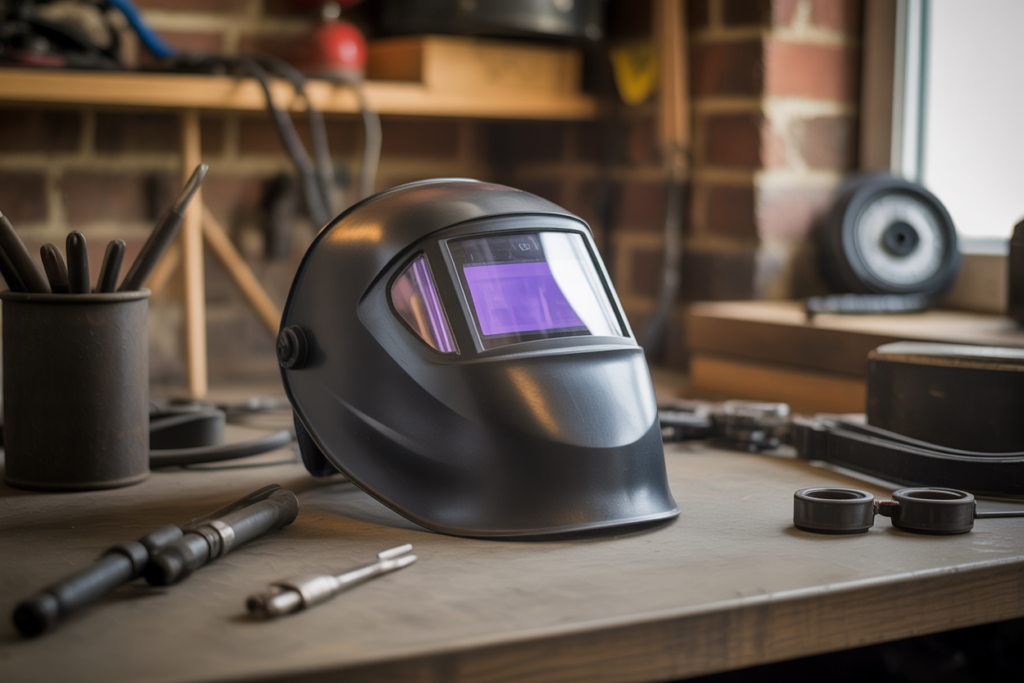
Certification marks by region
- US: Look for ANSI Z87.1 or a designation indicating compliance with ANSI/ISEA Z87.1 for eye and face protection.
- Canada: Look for CSA Z94.3 marking.
- EU: Look for CE marking along with references to EN 379 (and possibly EN 166/EN 175 on the packaging or data sheet).
Shade range and filter type
Auto-darkening helmets typically advertise a shade range (for example, 9–13). This tells you the range of darkness the filter can achieve automatically. Make sure the range fits the welding processes you perform (MIG/MAG, TIG, plasma cutting, etc.).
If you use passive shaded lenses, you’ll still want to confirm they meet the appropriate standards, but most modern helmets are auto-darkening and come with EN 379-compliant filters in EU markets or ANSI-compliant filters in the US.
Optical quality and rating
EU standards (EN 379) include optical classes that indicate the lens’s optical quality (how free it is from distortion). Higher quality lenses have better optical class ratings (e.g., Class 1 being top quality). In the US, you’ll want a helmet that maintains good optical clarity and minimal distortion in the viewing area.
UV/IR protection in light and dark states
Certified welding filters should block harmful UV and IR radiation in both light and dark states. This is essential even when the arc is not visible to prevent long-term eye damage.
Reaction time and sensor performance (for auto-darkening)
Many ADLs have fast response times (on the order of milliseconds) when the arc strikes. Check the manufacturer’s specs for the dark-to-light and light-to-dark response times and ensure they suit your welding speed and process.
Durability and fit
Certification marks imply the helmet’s shell and lens are tested for impact resistance and durability. A good fit, comfortable headgear, and adjustable headbands also matter for prolonged use and consistent protection.
Why these standards matter for different welding processes
MIG/MAG and flux-cored welding
These processes can produce strong, visible arcs. A helmet with an appropriate shade range (often 10–13 in many ADLs) and solid impact resistance is important for protection during high-current welding.
TIG welding
Often uses lower currents and requires excellent optical clarity and a wide field of view. A helmet with the highest optical quality ratings and a responsive ADL is advantageous.
Plasma cutting and heavy arc operations
These can emit intense UV/IR radiation and bright arcs. Ensure the filter provides ample protection across the required shade range and that the helmet’s optical and mechanical protections meet the applicable standards.
Practical tips for choosing and using a compliant helmet

Match the standard to your region
- If you work in the US, prioritize ANSI Z87.1-compliant helmets and check the ADL specs for welding processes you use.
- If you’re in the EU, ensure the helmet carries CE marking and that the filters are EN 379-compliant, with EN 166/EN 175 references as applicable.
- If you’re in Canada, look for CSA Z94.3 compliance in addition to any EU or US overlaps if you work across borders.
Verify labeling and documentation
Always check the product label, user manual, and data sheet for the standard numbers (e.g., Z87.1, EN 379, EN 166) and the shade range. The documentation should clearly state which standards apply to the helmet and its filters.
Consider the processes you perform most
Choose a helmet whose shade range and auto-darkening response are appropriate for your typical welding tasks. If you do both TIG and MIG, a broader shade range (e.g., 9–13) is often beneficial.
Don’t overlook maintenance
Even the best-certified helmet can fail if the lens is scratched, the sensors are covered by dust, or the battery is weak. Regularly clean the viewing lens, replace worn shields, and check sensor operation. Follow the manufacturer’s maintenance guidelines to maintain certification integrity.
Buy from reputable manufacturers
Reputable brands often provide clear documentation of conformity with recognized standards, including current versions of ANSI Z87.1, EN 379, EN 166/EN 175, and CSA Z94.3. They also usually offer replacement parts, warranty coverage, and better support for regulation compliance in your region.
Bottom line
When you’re evaluating welding helmets, the safety standards and certifications are more than a badge—they’re a guarantee that the helmet has undergone testing for impact protection, optical clarity, UV/IR shielding, and reliable auto-darkening performance. By checking regional marks (ANSI Z87.1 in the US, CSA Z94.3 in Canada, CE with EN 379/EN 166/EN 175 in the EU) and reviewing the helmet’s shade range, optical quality, and sensor specifications, you can select gear that not only meets regulatory requirements but also keeps your eyes and face safer on the job.