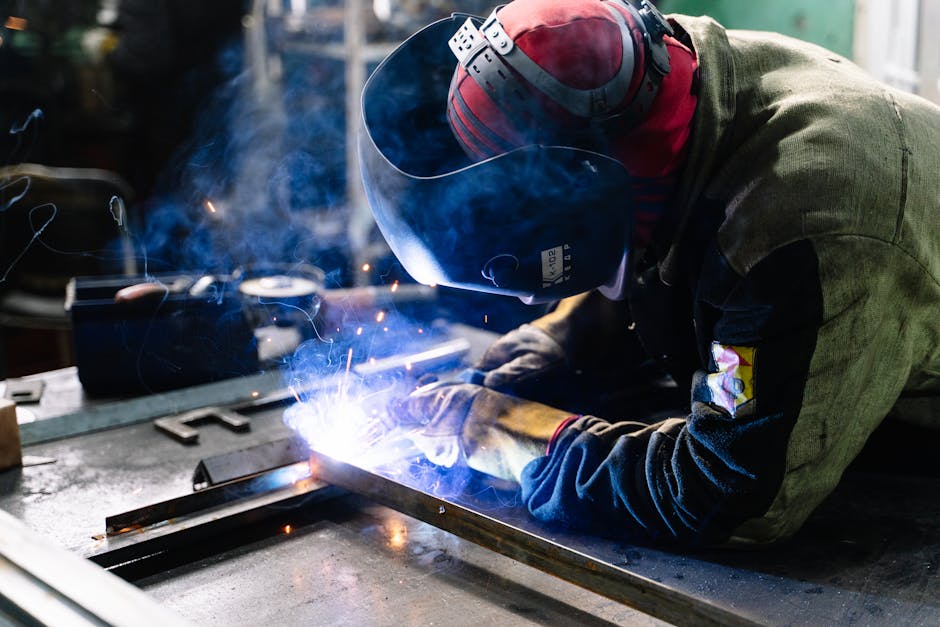
The Hidden Arc Flash Risk Most Welders Ignore: Reflected UV and Indirect Exposure
Last Updated: February 15, 2026 by Louis Sham
You know not to look directly at a welding arc. That lesson gets drilled into every welder from day one. The bright flash can cause “arc eye”—a painful condition that feels like sand in your eyes—sometimes within seconds.
But here’s the problem most welders don’t know about: UV radiation from welding doesn’t just travel in a straight line. It bounces off metal, concrete, walls, and even painted surfaces. This reflected UV can damage your eyes just as badly as direct exposure, except it happens slowly over years instead of instantly.
Recent safety studies show that reflected UV causes a significant percentage of welding eye injuries—and most welders don’t even know they’re being exposed.
What Is Reflected UV Radiation?
Think of UV radiation like a ball bouncing around a room. When your welding arc lights up, it shoots out intense UV rays in all directions. Those rays hit surfaces and bounce back, just like light reflects off a mirror.
Here’s what’s scary: different materials reflect different amounts of UV:
- Polished stainless steel reflects up to 70% of UV radiation
- Galvanized metal reflects about 60-65%
- Regular carbon steel reflects 35-40%
- White painted walls can reflect 50-80%
- Even concrete floors reflect 15-25%

Direct UV (red) vs. Reflected UV (orange/yellow) – Both can damage your eyes
The difference between direct and reflected exposure is this: direct exposure happens fast and hurts immediately. Reflected exposure happens slowly over hours, days, and years. You don’t feel it happening, but the damage adds up.
The Back-Exposure Problem Nobody Talks About
Here’s a common scenario in any busy shop: You’re working on your piece. Another welder is working 30 feet behind you on a different job. His arc lights up, the UV bounces off the floor, and hits you from behind.
The problem: Your auto-darkening helmet doesn’t activate because you’re not striking your own arc. Your safety glasses aren’t rated to block UV from that angle. The flash is behind you, so you don’t even see it coming.

Back-exposure: You can’t see the other welder’s arc, but reflected UV still reaches your eyes
Studies from shipyards and large fabrication shops show that helpers, fitters, and inspectors working near welding operations get 40-60% more UV exposure than expected—almost all from reflected sources. These workers often wear clear safety glasses, thinking they’re far enough away to be safe.
The result? Workers in their 40s and 50s developing cataracts and vision problems, often without realizing their “safe distance” from welding operations caused the damage.
Your Shop Environment Makes It Worse
Some welding environments turn into UV reflection chambers without anyone realizing it:
Enclosed Spaces
Welding inside tanks, pipes, or structural cavities creates a dangerous situation. UV radiation bounces repeatedly between the curved walls. In some cases, the reflected UV inside a confined space can be stronger than direct viewing because it’s hitting you from every direction at once.
Low Ceilings
In shops with 8-foot ceilings, the UV from an arc at waist height hits the floor, bounces up to the ceiling, then bounces back down. Workers 10-20 feet away get hit three times: from the arc, from the floor reflection, and from the ceiling reflection.
White or Light-Colored Booths
Many shops paint welding booths white to improve visibility for quality inspectors. Those bright white walls reflect UV across the entire workspace. Inspectors and nearby workers accumulate dangerous UV exposure while doing tasks they think are safe.
Why Your Safety Glasses Aren’t Enough
Most welders own several pairs of safety glasses: clear for grinding, shade-3 for cutting, shade-5 for watching other people weld. This makes sense for direct viewing, but it fails completely for reflected UV.
Here’s the problem with standard safety glasses:
They block 99.9% of UV when it hits the lens straight on. But reflected UV doesn’t hit straight on—it comes from the sides, from below, around the temples. At those angles, protection drops dramatically.

Standard safety glasses block front UV but allow 15-30% penetration from sides and bottom
Testing shows that side-angle UV can penetrate 15-30% through standard safety glasses, even ones with proper shade ratings. Over a 20-year career, spending six hours a day exposed to this “blocked” UV still exceeds safe limits.
How to Actually Protect Yourself
Real protection against reflected arc flash requires thinking about the whole system, not just individual pieces of equipment.
1. Environmental Controls
Don’t just put welding screens around the person welding. Map out where reflected UV goes in your shop:
- Where do floor reflections concentrate?
- Which walls or ceilings create secondary radiation zones?
- Use portable screens with UV-absorbing material to block reflection paths
- Consider UV-absorbing paint on ceilings in permanent welding bays
2. Better PPE Standards
Anyone working within 50 feet of active welding needs shade-3 to shade-5 safety glasses—even if they’re not welding themselves. This includes:
- Helpers and fitters
- Quality inspectors
- People working on nearby jobs
- Anyone walking through the area
Choose wraparound frames that minimize gaps at the sides and temples. In high-reflection areas like confined spaces, use specialty glasses with side shields rated for UV protection, not just impact.
3. Spatial Awareness
Create “hot work zones” with clear boundaries. Post signs that say: “Active Welding – Shade Glasses Required Beyond This Point.”
In multi-welder areas, train people to call out when they’re striking an arc: “Arc on!” This simple step reduces back-exposure incidents by 60-75%.
4. Rotation and Breaks
Even properly attenuated UV becomes dangerous with enough exposure time. Rotate workers out of high-reflection areas. Schedule welding to minimize overlapping exposure when possible. Give people “cool-down” periods in low-reflection areas between welding sessions.
5. Choose Better Materials
When building or renovating welding facilities:
- Dark epoxy floor coatings reduce reflections by 40-60% vs. bare concrete
- Matte-finish painted surfaces work better than gloss
- UV-absorbing ceiling tiles are available for industrial welding facilities
Is It Worth the Cost?
Yes. A single workers’ compensation claim for early cataracts can cost over $50,000 in medical bills and lost time. The average welder works 15-25 years before vision problems show up. Protecting their eyes protects your workforce and your bottom line.
But it’s bigger than just money. We’ve mostly solved the problem of acute arc eye through better helmets and training. The next challenge is protecting against the slow, cumulative damage that shows up decades later—damage that current safety programs barely address.
What You Need to Remember
UV radiation from welding doesn’t just go straight from the arc to your eyes. It bounces off everything—floors, walls, metal, even painted surfaces. This reflected UV can cause the same eye damage as direct exposure, except it happens slowly enough that you don’t notice until the damage is permanent.
Key Takeaways:
- Reflected UV is a real hazard that most welders underestimate
- Back-exposure from other welders’ arcs is especially dangerous
- Standard safety glasses don’t protect against side and bottom UV entry
- Everyone within 50 feet of welding needs proper shade glasses
- Environmental controls (screens, proper surfaces) are just as important as PPE
- The damage builds up slowly over years—prevention is the only cure
Arc flash welding eye protection isn’t just about the helmet you wear when you’re welding. It’s about understanding how UV moves through your workspace and protecting yourself from all the angles—especially the ones you can’t see coming.
Take the time to map your shop’s reflection patterns. Invest in proper shade glasses for everyone in welding areas. Install screens where they actually block reflected paths, not just where they look good. Your eyes are irreplaceable, and the damage from reflected UV is permanent.
The welders who understand these hidden risks—and the shops that implement real protection systems—will preserve vision health across 20+ year careers. In an industry where precision and safety depend on seeing clearly, that’s not just smart. It’s essential.