
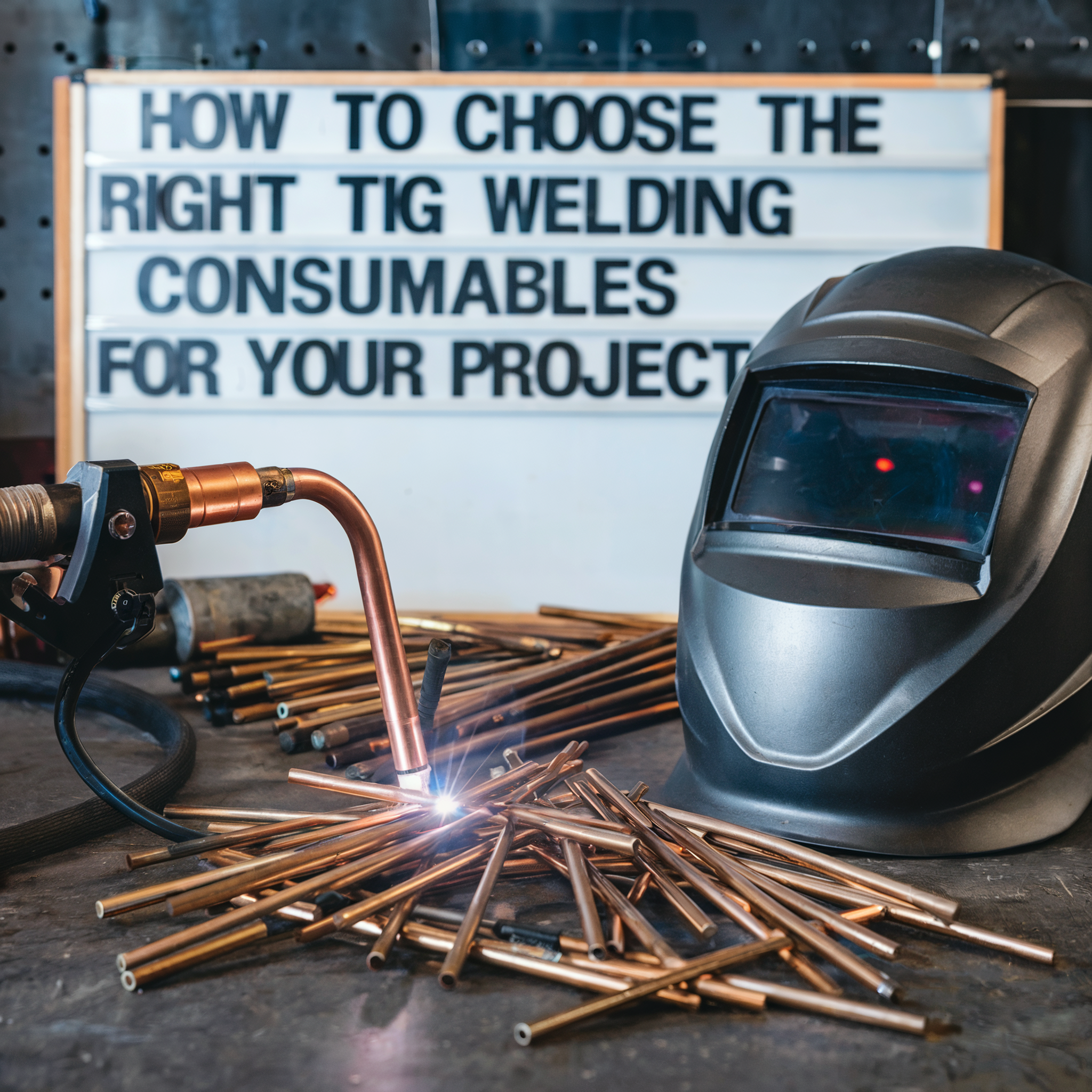
How to Select the Right TIG Welding Consumables for Your Project
Last Updated: September 6, 2024 by Louis Sham
TIG (Tungsten Inert Gas) welding is a precise and versatile welding process widely used in various industries including aerospace, automotive, and metal fabrication. It offers superior control over the weld, making it ideal for projects that require high-quality results. The choice of TIG welding consumables plays a crucial role in achieving these superior welds.
In this article, you will gain a comprehensive understanding of how to choose the appropriate welding consumables based on your specific project requirements. From types of tungsten electrodes to the importance of collets and gas lenses, this guide covers all essential factors. You can expect practical advice and insights to help you navigate the complexities of TIG welding consumables, ensuring optimal performance and quality in your welding projects.
Understanding TIG Welding Consumables
Types of Tungsten Electrodes
Selecting the right tungsten electrode is essential for achieving optimal weld quality. There are several types of tungsten electrodes, each suited for specific applications:
1. Green (Pure Tungsten)
- Composition: 99.5% pure tungsten.
- Applications: Ideal for AC welding of aluminum and magnesium.
- Characteristics: High burn rate, less durable but provides good arc stability in AC welding.
2. Red (Thoriated Tungsten)
- Composition: Contains thorium (typically around 2%).
- Applications: Best for DC welding on steel and stainless steel.
- Characteristics: Enhanced arc stability, better current capacity, longer life. Note that thorium is slightly radioactive, requiring careful handling.
3. Grey (Ceriated Tungsten)
- Composition: Contains cerium oxide (1.8-2.2%).
- Applications: Suitable for low amperage DC applications such as thin sheet metal.
- Characteristics: Excellent arc starts at low currents, ideal for precision welding.
4. Gold (Lanthanated Tungsten)
- Composition: Contains lanthanum oxide (1.3-1.7%).
- Applications: Versatile for both AC and DC welding.
- Characteristics: Good arc stability, low consumption rates, suitable for a wide range of materials including steel and aluminum.
5. Brown (Zirconiated Tungsten)
- Composition: Contains zirconium oxide (0.15-0.40%).
- Applications: Primarily used for AC welding.
- Characteristics: Resists contamination, maintains a stable arc, ideal for aluminum and magnesium alloys.
6. Purple (Rare Earth Blend)
- Composition: A mix of rare earth elements excluding thorium.
- Applications: Suitable for both AC and DC applications.
- Characteristics: Combines benefits of thoriated electrodes without radioactive material, offers excellent performance across various materials.
Tungsten electrodes act as the heart of the TIG welding process by conducting electricity to create an arc. Choosing the right type not only influences weld quality but also impacts the longevity of your consumables and equipment.
Collets and Collet Bodies
Collets and collet bodies play a critical role in holding the tungsten electrode securely within the torch:
1. Proper Sizing
- Ensures effective electrical conductivity and prevents overheating or arcing issues.
- Using the correct size collet helps maintain a stable arc and consistent weld quality.
Gas Lenses
Gas lenses enhance gas coverage over the weld area:
1. Improved Shielding
- Reduces turbulence during welding by providing a laminar flow of shielding gas.
- Enhanced gas coverage protects the weld pool from contamination, resulting in cleaner welds.
Understanding these components is vital for achieving high-quality results in your TIG welding projects. Each component plays an integral role, from selecting the appropriate tungsten electrode to ensuring proper gas coverage with gas lenses.
Collets and Collet Bodies
Collets and collet bodies play a crucial role in TIG welding. They hold the tungsten electrodes in place within the torch, ensuring stability and precision during the welding process.
Importance of Proper Sizing
Proper sizing is essential for maintaining electrical conductivity and effective performance. An incorrect fit can lead to poor arc stability and inconsistent welds.
Collet Sizes
Collets come in various sizes to match the diameter of different tungsten electrodes such as pure tungsten, thoriated tungsten, ceriated tungsten, lanthanated tungsten, and zirconium tungsten. Ensuring the right fitment is critical for optimal performance.
Electrical Conductivity
The right collet size ensures good electrical contact between the electrode and the power source, which is vital for creating a stable arc.
Selecting appropriately sized collets and collet bodies enhances your overall welding efficiency by providing consistent electrical conductivity and stable electrode positioning.
Gas Lenses
Gas lenses are essential in TIG welding as they improve gas coverage and decrease turbulence during the welding process. These components function by evenly spreading the shielding gas around the tungsten electrode, resulting in better arc stability and cleaner welds.
Key Benefits of Gas Lenses:
- Enhanced Shielding Effectiveness: By providing a uniform flow of gas, gas lenses help protect the weld pool from contamination caused by atmospheric gases.
- Reduced Turbulence: The design of gas lenses minimizes turbulence, which can disrupt the consistency of the weld bead and lead to defects.
- Improved Arc Stability: Consistent gas coverage ensures that the arc remains stable, making it easier to achieve precise and high-quality welds.
Using gas lenses, especially with pure tungsten, thoriated tungsten, ceriated tungsten, lanthanated tungsten, or zirconium tungsten electrodes, can significantly improve the performance and quality of your welding projects. They are an essential component for any welder aiming to achieve professional results.
Factors Influencing the Choice of TIG Welding Consumables
Material Thickness Considerations
Material thickness plays a critical role in determining the appropriate TIG welding consumables. Different thickness levels require specific types of tungsten electrodes and amperage settings to achieve optimal results.
Electrode Selection Based on Thickness:
- Thin Materials (Below 1/8 inch):Grey (Ceriated): Excellent for low amperage DC applications, making it suitable for thin materials.
- Gold (Lanthanated): Versatile for both AC and DC welding, offering good arc stability at lower currents.
- Amperage Setting: Typically ranges from 5 to 80 amps, depending on the exact material and its properties.
- Medium Thickness (1/8 inch to ¼ inch):Red (Thoriated): Enhances arc stability and current capacity, ideal for medium-thickness materials in DC welding.
- Purple (Rare Earth Blend): Suitable for both AC and DC applications, providing a stable arc without radioactive elements.
- Amperage Setting: Generally set between 80 to 200 amps.
- Thick Materials (Above ¼ inch):Brown (Zirconiated): Perfect for AC welding of thick aluminum and magnesium, resisting cracking with a stable arc.
- Green (Pure): Though it has a high burn rate, it’s effective for thick sections of aluminum in AC mode.
- Amperage Setting: Falls within the range of 200 to 400 amps or higher, depending on the specific requirements.
Influence on Amperage Settings:
- Thinner materials demand lower amperage settings to prevent burn-through and ensure fine control over the weld pool.
- Medium thickness materials benefit from moderate amperage settings that balance penetration with control.
- Thicker materials require higher amperage settings to achieve deep penetration and robust welds.
Additional Considerations:
When dealing with varying material thicknesses within a single project:
- Use multi-pass welding techniques for thicker sections to maintain weld quality without excessive heat input.
- Adjust tungsten electrode size accordingly; smaller diameters are better suited for thinner materials, while larger diameters handle higher currents needed for thicker sections.
Understanding these nuances helps you choose the right tungsten electrode and set up your welder correctly. This knowledge ensures that each weld is strong and visually appealing, regardless of material thickness.
Welding Position Considerations
Welding position significantly influences gas coverage and heat distribution, impacting overall weld quality. Different positions such as flat, vertical, and overhead each have unique requirements.
Flat Welds
Typically the easiest position, allowing for optimal gas coverage and heat distribution. Heat naturally rises, which helps maintain a stable weld pool.
Vertical Welds
Require precise control to prevent the weld pool from sagging. Shielding gas coverage can be more challenging; using a gas lens can enhance protection.
Overhead Welds
The most complex due to gravity pulling on the weld pool. Effective gas coverage is crucial to avoid contamination. High skill is needed to manage heat distribution.
Understanding how your welding position affects these factors will help you select the appropriate welding consumables and achieve high-quality results for your specific project.
Power Source Considerations
Understanding the differences between AC and DC power sources is crucial for optimal electrode performance.
AC Power Source:
- Commonly used for welding materials like aluminum and magnesium.
- Suitable for use with Green (Pure) tungsten electrodes.
- Offers balanced heat input, making it ideal for metals that require cleaning action during the weld.
DC Power Source:
- Primarily used for welding steel, stainless steel, and copper alloys.
- Works well with Red (Thoriated), Grey (Ceriated), and Gold (Lanthanated) electrodes.
- Provides stable arc characteristics and deeper penetration.
Selecting the correct power source directly impacts your choice of tungsten electrode. For instance, a DC power source paired with a Red (Thoriated) electrode offers superior arc stability and higher current capacity, perfect for steel welding. Conversely, an AC power source with a Green (Pure) electrode ensures effective welding of aluminum due to its balanced heat input.
Choosing the Right TIG Welding Consumables for Your Project
Evaluating Project Requirements
When selecting consumables for projects, evaluating your specific project requirements is essential. This process involves a thorough assessment of material type, thickness, and identifying the necessary welding techniques.
Assessing Material Type and Thickness:
- Material Type: Different materials require different types of tungsten electrodes. For example:
- Aluminum and Magnesium: Often welded using Green (Pure) tungsten electrodes.
- Steel and Stainless Steel: Typically require Red (Thoriated) electrodes.
- Nickel Alloys: Best suited for Gold (Lanthanated) or Purple (Rare Earth Blend) electrodes.
- Material Thickness: The thickness of the material significantly affects your choice of tungsten electrode and amperage settings:
- Thin Materials: For materials under 1/8 inch, a smaller diameter tungsten electrode and lower amperage are necessary to prevent burn-through.
- Thick Materials: For thicker materials over 1/8 inch, you will need a larger diameter tungsten electrode and higher amperage settings to achieve deep penetration and strong welds.
Identifying Specific Welding Techniques:
Understanding the specific welding techniques required for your project helps in choosing the right consumables:
- Tack Welding: Requires precise arc starts; Grey (Ceriated) electrodes are ideal due to their excellent low-current performance.
- Pulse Welding: Often used in thin materials to control heat input; Gold (Lanthanated) or Purple (Rare Earth Blend) electrodes perform well due to their stable arcs.
- Continuous Welding: For longer welds on thicker materials, robust electrodes like Red (Thoriated) offer consistent performance.
By assessing these factors, you can ensure that you select the appropriate TIG welding consumables tailored to your project specifications. This careful consideration leads to high-quality welds and efficient use of resources.
Matching Consumables to Tasks
Selecting the appropriate tungsten electrode depends largely on your specific application. Here’s a breakdown:
| Color Type Best For Green | Pure | AC welding of aluminum and magnesium |
| Red | Thoriated | DC welding on steel and stainless steel |
| Grey | Ceriated | Low amperage DC applications |
| Gold | Lanthanated | Versatile for both AC and DC welding |
| Brown | Zirconiated | AC welding |
| Purple | Rare Earth Blend | Both AC and DC applications |
Collets and Collet Bodies should match the chosen tungsten electrode diameter to maintain proper electrical conductivity. Ensure the collet holds the electrode securely within the torch.
Gas Lenses enhance gas coverage, crucial for tasks requiring precise shielding. They reduce turbulence, preventing contamination of the weld pool.
By aligning project requirements with these consumable choices, you ensure optimal performance and quality in your welding projects.
Additional Considerations in Using TIG Welding Consumables
Anti-Spatter Agents
Anti-spatter agents play a crucial role in protecting your welds from unwanted spatter. These agents create a barrier that prevents molten metal droplets from adhering to the workpiece and surrounding equipment. By applying anti-spatter sprays or gels, you minimize cleanup time and maintain the integrity of your welds. Their use is especially beneficial when working on projects requiring high precision and aesthetic quality.
Shielding Gases Types
Selecting the appropriate shielding gas is vital for achieving optimal welding performance:
- Argon: The most commonly used shielding gas in TIG welding, argon provides excellent arc stability and weld pool control. It is suitable for welding various materials like aluminum, stainless steel, and carbon steel.
- Carbon Dioxide (CO2): While less common in TIG welding compared to argon, CO2 can be mixed with other gases to enhance penetration and reduce oxidation.
Understanding the properties of these gases helps you tailor your choice based on the specific requirements of your project. Using the right shielding gas ensures improved weld quality and increased efficiency.
Conclusion
Achieving high-quality results in TIG welding depends on making informed decisions about consumable selection. Each component, from tungsten electrodes to gas lenses, plays a crucial role in the welding process. By understanding the specific requirements of your project, you ensure both superior welds and the longevity of your equipment.